
Frequently Asked Questions
Straight answers about neodymium magnets from the team that ships more than 25 million of them. Find shipping and return details, pick the right magnet, and learn how magnets work, with diagrams and real pull-force data.
No answers match your search. Try a different word, or ask our team.
- Shipping, Delivery & Returns24 questions
- Working with Neodymium Magnets25 questions
- Magnet Specs & Reference8 questions
- About Neodymium Magnets50 questions
- Magnet Project Guides23 guides
Shipping, Delivery & Returns
Order cutoffs, delivery times, tracking, returns and payment.
When will you ship my order?
Most orders placed Monday through Friday by 1:00 PM Mountain Time ship the same day. Orders placed after 1:00 PM, on weekends or on holidays ship the next business day. You’ll get an email with tracking as soon as your package leaves our building.
When will I get my order?
Delivery time depends on the shipping speed you choose. In the U.S., Standard (free) arrives in 3 to 5 business days after shipping, Priority in 2 to 3, and Overnight on the next business day. International orders usually take 7 to 21 days, depending on the destination and service.
What are your shipping charges?
Standard Shipping is free on every U.S. order, with no minimum purchase. Choose Standard at checkout to get it. Priority, Overnight and international shipping are available for an added charge that’s calculated at checkout from your address and the package weight. Orders to Canada over $120 CAD also ship free.
Can I expedite my shipping?
Yes. At checkout you can upgrade from free Standard Shipping to Priority (2 to 3 business days) or Overnight (next business day). Overnight orders placed by 3:00 PM Mountain Time on a business day ship the same day. We can also bill shipping to your own FedEx or UPS account.
What is the latest I can order for next-day delivery?
Place your order by 3:00 PM Mountain Time, Monday through Friday (excluding holidays) and choose Overnight at checkout. It ships that day and arrives the next business day. Overnight orders placed on Friday arrive Monday unless you choose Saturday delivery for an additional fee.
Do you ship on weekends?
No. We ship Monday through Friday, excluding major U.S. holidays. Orders placed on Saturday or Sunday, or after 1:00 PM Mountain Time on Friday, ship on Monday. Weekday orders placed by 1:00 PM MT ship the same day.
Can my order arrive on a Saturday or Sunday?
Yes, it’s possible. Depending on the carrier and your area, Standard packages sometimes arrive on a Saturday or Sunday. If you need Saturday delivery, place an Overnight order with Saturday delivery by 3:00 PM Mountain Time on Friday. Saturday delivery has an additional fee.
How can I see the status of my order?
Sign in with the email address you used to place your order. You don’t need to have created an account: guest orders show up too. Once you’re signed in, you’ll see your order status, tracking and full order history. We also email you when your order is received, when it ships (with tracking) and when it’s out for delivery.
My tracking says delivered, but I didn't get it. What should I do?
Carriers sometimes scan a package as delivered a day or so before it actually arrives. If your tracking says delivered but you don’t have it, check the spots below and wait one business day. If it still hasn’t shown up, contact us and we’ll work with the carrier to find it or make it right.
How do I change or cancel my order?
Call us right away at 1 (855) 328-2822, Monday to Friday, 9 AM to 5 PM Mountain Time. Because most weekday orders placed by 1:00 PM MT ship the same day, your order may already be packed or on its way. We’ll do our best to change or cancel it. If it has already shipped, you can return it once it arrives.
What is your return policy?
You can return items in new, sellable condition within 30 days of delivery. U.S. customers who choose store credit get free return shipping. You can also choose a refund to your original payment method, minus the cost of the return label. Please allow up to two weeks after we receive your return for processing.
Can I exchange my order?
Yes. The quickest way to exchange is to return the items you don’t want and place a new order for the ones you do. If you choose store credit, return shipping is free for U.S. customers and we email you a gift code to use on your next order.
Are there handling or restocking fees?
No. We never charge restocking or handling fees on items returned within 30 days of delivery in new, sellable condition. The only cost you might see is the return label, and that’s free when you choose store credit.
Will I receive an order confirmation or receipt?
Yes. Right after checkout we email a detailed order confirmation to the address you entered. It lists your items, quantities, prices, tax, shipping method and order number. Need a PDF receipt or invoice? Contact us and we’ll send one. Account holders can also view past orders in Order History.
What types of payment do you accept?
We accept all major credit cards (Visa, Mastercard, American Express, Discover, Diners Club), PayPal, Amazon Pay, Shop Pay, Apple Pay and Google Pay. Business customers can also order on a purchase order with NET 30 terms (with credit approval) and pay by check, ACH or wire transfer.
Can I pay with a purchase order?
Yes. Businesses, schools and other institutions can order on a purchase order with NET 30 terms, subject to credit approval. Invoices can be paid by check, ACH or wire transfer. Call 1 (855) 328-2822 or contact us to get started.
Do you charge sales tax? How do I get a tax exemption?
Element Magnets, Inc. may be required to collect sales tax on your order. The rate is based on your shipping address. If your business or institution is tax-exempt, send us a valid exemption certificate before you order. We update your account within one business day and can’t refund sales tax after an order is placed.
How do I get a discount code?
Sign up for our email newsletter using the form at the bottom of any page on our site. We send subscribers coupon codes, sale announcements and new product news. To use a code, enter it in the Discount code box at checkout.
Can I get a discount on bulk orders?
Yes. Most magnet listings include a volume pricing table that lowers the price per pack as your quantity goes up. Scroll down on any product page to see the tiers. For quantities beyond the table, or for custom sizes, contact us for a quote.
Do you make custom magnets?
Yes. We manufacture neodymium magnets to your specifications: size, shape, grade, coating and magnetization direction. Custom orders have a $3,000 USD minimum and a typical lead time of 6 to 8 weeks, and our team can help with design and samples. If one of our 500+ stock sizes works, it ships the same day when you order by 1 PM Mountain Time on a weekday.
Are your magnets RoHS and REACH compliant?
Yes. Our neodymium (NdFeB) magnets comply with EU RoHS (Directive 2011/65/EU as amended by 2015/863), EU REACH (Regulation EC 1907/2006) and China RoHS. We can supply declarations for the items you buy on request.
Do you ship internationally?
Yes. We ship worldwide with FedEx. Shipping costs are calculated automatically at checkout, and international orders typically arrive in 7 to 21 days. Orders to Canada over $120 CAD ship free. For some countries, duties and taxes are added at checkout and we pay them for you, so there’s nothing to pay on delivery. If they aren’t added at checkout, the carrier may collect them before delivery.
Do you deliver to P.O. boxes or APO/FPO addresses?
Yes. We ship to P.O. boxes with Standard and Priority service; Overnight isn’t available to P.O. boxes, so use a street address if you need next-day delivery. We also ship to APO and FPO military addresses at no charge.
Do I need an account to place an order?
No. You can check out as a guest without creating an account. An account is optional, but it saves your addresses and keeps your order history and tracking in one place.
Working with Neodymium Magnets
Choosing, mounting, gluing, stacking and handling magnets.
What is the best way to separate strong magnets?
Slide them apart; don’t pull. Push the end magnet sideways off the stack until it clears, then move it well away so it can’t jump back. Pulling straight apart means fighting the full pull force. Sliding only has to overcome a fraction of it. For stronger magnets, use the edge of a table for leverage or a Magnet Splitter.
How should I store neodymium magnets?
Keep them dry, at room temperature, in their original packaging or with spacers between stacks, and well away from children, cards, electronics and medical implants. Neodymium magnets don’t need a keeper and don’t weaken in storage. The real risks are corrosion, chipping when magnets snap together, and harm to people or devices nearby.
How do I pick the best magnet for my project?
Work through five questions: what will the magnet stick to, how will you mount it, what shape fits, what size fits, and how much pull force do you need? Then order a size or two and test. Size usually matters more than grade, and real-world holding power is lower than the listed pull force because of gaps, thin steel and sliding loads.
How many magnets do I need to hold something?
Add up the listed pull force of all your magnets and aim for at least 1.5× the item’s weight when it pulls straight off the steel, or 7 to 10× when it hangs on a wall and could slide down. Use the higher end of that range on thin steel, such as a fridge door. Any gap between the magnet and the steel cuts the hold further. The calculator below does the math for our most popular N52 discs.
Which magnet shape should I choose?
Start with how the magnet will be mounted. Discs and blocks glue into pockets or stick onto flat surfaces, rings and countersunk magnets take a bolt or screw, and pot magnets put the most holding power on one face with a screw, stud or hook built in. Cylinders fit deep holes and reach farther through gaps. Spheres are for toys, sculptures and swivel joints.
Will stacking magnets together make them stronger?
Yes. Magnets stacked north to south act like one thicker magnet, so the stack pulls harder than a single magnet. The gain is biggest for the first few. Once the stack is about as tall as it is wide, each extra magnet adds very little pull force.
Will magnets work through wood, drywall, glass or fabric?
Yes. Wood, drywall, glass, plastic and fabric don’t block a magnetic field, but their thickness acts as an air gap and holding power drops fast. Through 1/2 inch drywall, a 1 × 1/2 Inch N52 disc keeps only about 4.5% of its 54.5 lb rating against a steel plate. Put a second magnet on the other side instead and the pair holds about 16%. For thick panels, use bigger magnets, magnet pairs, or set the magnets into the surface.
What are the best magnets for 3D printing projects?
Small N52 disc magnets in the size your design calls for, usually metric. 6 × 2 mm discs are the standard for Gridfinity bins and snap-on lids, 6 × 3 mm or 1/4 × 1/8 Inch discs add holding power for boxes and enclosures, 8 × 2 mm and 10 × 2 mm discs suit flat panels and covers, and 3 × 1 mm or 5 × 2 mm discs fit miniatures. Use N52 for the most pull in a small pocket, epoxy-coated magnets for outdoor prints, and countersunk magnets or cylinders when a part needs a screw or a deep hole.
Can the heat from a 3D printer damage neodymium magnets?
Usually not, for PLA and PETG prints. Standard N-grade neodymium magnets are rated to about 80 °C (176 °F). Magnets sealed into a print under a few layers of PLA or PETG warm only briefly, because the thin plastic cools in seconds. The real risks are heat that lasts: heated beds above 80 °C (common for ABS and ASA), hot enclosures, annealing prints, heat-set insert tools, or the hot nozzle touching the magnet. For those, add magnets after printing or use a high-temperature grade such as N42SH.
How much clearance should I leave for magnets in a 3D printed hole or pocket?
For FDM prints, start with a pocket 0.1 to 0.15 mm larger than the magnet’s diameter for a press fit, or 0.2 to 0.3 mm larger for a glued fit, and 0.1 to 0.2 mm deeper than the magnet so it sits flush. For magnets sealed in mid-print, make the pocket about 0.2 mm larger in both width and depth. Resin printers need less, about 0.05 to 0.15 mm. Every printer and filament is a little different, so print a quick test coupon before committing to a design.
What materials do neodymium magnets attract?
Neodymium magnets attract ferromagnetic materials: iron, most steels, nickel, cobalt and some of their alloys, plus other magnets. They don’t attract aluminum, copper, brass, bronze, gold, silver, lead, zinc, titanium, wood, plastic or glass. Stainless steel depends on the grade.
Why won't my magnet stick?
Most of the time the surface isn’t magnetic steel, the steel is too thin, or something creates a gap. Many stainless steel appliance fronts, aluminum and brass don’t attract magnets. Thin sheet steel, paint and texture cut holding power, and loads that slide down a wall need about 5× more pull than loads that pull straight off. If two magnets won’t meet, they’re facing the same pole: flip one.
How can I keep a magnet from sliding down a vertical surface?
Give the weight something to rest on, add grip, or add pull force. On a wall, only friction keeps a magnet from sliding, and that friction is about 15 to 25% of its rated pull force. The most reliable fixes are a ledge, lip or screw under the item so the magnet only has to hold it against the wall; rubber-coated magnets for more grip; and enough total pull force, 7 to 10 times the weight (the high end on thin sheet steel), spread across several magnets.
Is one pole, north or south, stronger than the other?
Neither. A magnet’s north and south poles are equally strong. Every field line that leaves the north pole returns to the south pole, so the field is the same strength at both faces. Either face holds the same weight on steel.
How can I identify the north and south poles of a magnet?
The easiest way is a compass: the end of the needle that normally points north is attracted to the magnet’s south pole and points away from its north pole. You can also use a magnet with marked poles, a Magnetic Pole Detector, or hang the magnet on a string and see which face turns north.
How should I glue magnets?
For most projects, use a two-part epoxy. Clean both surfaces with isopropyl alcohol, lightly scuff the smooth nickel plating, apply the glue, hold the magnet in place while it sets and let it cure for at least 24 hours before loading it. Never use hot glue: the heat can weaken the magnet.
Can I solder or weld to neodymium magnets?
No. Soldering and welding heat a magnet far beyond what it can survive. Standard N-grade neodymium magnets start to lose strength permanently above 80°C (176°F), and around their Curie temperature of roughly 310°C (590°F) they lose their magnetism completely. Use epoxy or a mechanical mount such as screws, a pot magnet or a pocket instead.
What materials can I use to block or shield magnetic fields?
No material makes a magnetic field disappear, but ferromagnetic metals redirect it. A steel plate or cup gives field lines an easy path, so they travel through the steel instead of the space behind it. Mu-metal works better for weak fields around sensitive electronics. Aluminum, copper and brass don’t shield a magnet’s static field.
Can I drill or machine neodymium magnets?
Generally, no. Neodymium magnets are hard and brittle like ceramic: they chip, crack or shatter instead of cutting cleanly, and they quickly ruin ordinary drill bits. Machining heat can demagnetize the magnet, and the fine dust is flammable. If you need a hole, buy a Countersunk, Ring or Pot magnet instead.
How do I install countersunk magnets without breaking them?
Use a flat-head screw that matches the countersink, mount the magnet on a flat surface, and stop turning as soon as the screw head sits flush with the magnet’s face. Neodymium is hard but brittle, and the countersunk hole works like a wedge: every turn after the head seats pushes outward on the thin ring around it until it cracks. Hand-tight is all a countersunk magnet needs. If you use a drill, set the clutch to one of its lowest numbers, drive slowly, stop about a turn early and finish by hand.
Can I use metric and imperial screws interchangeably with countersunk magnets?
No, not as a rule. Inch (imperial) flat-head screws have an 82° head and metric flat-head screws have a 90° head, and each countersunk magnet is made for one of them. Use a screw with the same angle as the countersink, a head no wider than the countersink and a shank that passes freely through the hole. A few sizes are dimensionally close, such as M3 and #4, M3.5 and #6, M4 and #8, and M5 and #10, but even then the head touches the magnet on a thin ring instead of the whole cone. That concentrates the force on brittle neodymium and can crack it, so treat a close cross-match only as a hand-tight fallback for light loads.
Is magnet-to-magnet stronger than magnet-to-steel?
When they touch, about the same. A magnet pulled straight off thick steel holds about its listed pull force, and a pair of identical magnets touching north to south holds about the same, not double. Add any gap, or use thin steel, and the pair wins. Through 1/8 in of wood or fabric, two 1/2 × 1/8 Inch N52 discs hold about 2.5 lb, while one disc on thick steel holds about 1.1 lb. Steel strike plates still win on cost, easy alignment and having no polarity to get wrong.
How are steel strike plates and magnets used most effectively?
A steel disc, or strike plate, gives a magnet something to grab without the cost of a second magnet. For the best hold, use a plate slightly wider than the magnet and as thick as your design allows. Plates are great for latches, box lids, cabinet doors and banner stays because the magnet holds anywhere on the plate and there’s no polarity to get wrong.
What is the best way to work with self-adhesive magnets?
Clean the surface, peel the liner, press the magnet firmly into place and wait at least 24 hours before you load it. The 3M VHB 4920 adhesive on most of our magnets reaches about 90% of its strength in 24 hours and full strength in 72 hours. It bonds best to smooth metal, glass, hard plastics and painted surfaces, and poorly to polyethylene, polypropylene and other slick plastics. Most of our adhesive magnet packs come half with adhesive on the north face and half on the south face, so one of each makes a closure that attracts.
Can neodymium magnets be engraved with a laser?
Yes. A laser can mark a logo, part number or text into the plating of a neodymium magnet. The key is to mark only the surface of the coating: too much heat can weaken the magnet, and burning through the plating exposes bare metal that can rust. We also offer engraving on custom magnet orders.
Magnet Specs & Reference
Grades, magnetization directions, coatings and the magnet glossary.
Neodymium magnet grade information
A neodymium grade like N42 or N52SH tells you two things. The number is the maximum energy product in MGOe: higher is stronger. The letters after it set the maximum working temperature: none for 80°C (176°F), up to AH for 230°C (446°F). Most projects use N42 or N52; choose a lettered grade only when the magnet will run hot.
Should I buy N42 or N52 magnets?
N52 pulls about 25% harder than an N42 magnet of the same size. Choose N52 when the magnet has to be as small or as thin as possible. If you have a little more room, an N42 magnet one size thicker usually matches or beats N52. Both grades are rated to 80 °C (176 °F), so neither is better for heat.
Neodymium magnet magnetization directions
The magnetization direction tells you which faces are the north and south poles. Axially magnetized discs, cylinders and rings have their poles on the flat faces. Diametrically magnetized ones have poles on the curved sides. Blocks are magnetized through the thickness, which is always the last dimension listed. A magnet holds hardest when a pole face touches the steel or opposite pole.
What does "magnetized thru thickness" mean?
“Magnetized through thickness” means the north and south poles are on the two faces separated by the thickness: for most blocks and discs, the two largest, flat faces. On our listings, the thickness is always the last dimension, so a 1 × 1/2 × 1/8 Inch block has its poles on the two 1 × 1/2 Inch faces.
What other neodymium coatings are available?
Nickel-copper-nickel is the standard and works well indoors. For moisture and outdoor use, choose epoxy or plastic coated magnets; plastic is fully waterproof. Rubber protects surfaces from scratches. Specialty coatings like zinc, gold, silver, electroless nickel, PTFE (Teflon), parylene and Everlube are available on custom orders.
How do I convert magnet sizes between inches and millimeters?
1 inch is exactly 25.4 mm, so 1/16 in ≈ 1.6 mm, 1/8 in ≈ 3.2 mm, 1/4 in ≈ 6.4 mm and 1/2 in = 12.7 mm. Disc sizes are listed as diameter × thickness, blocks as length × width × thickness (thickness is the magnetized direction), and rings as outer diameter × inner diameter × thickness.
Magnet glossary
This glossary explains 85 magnet terms in plain English, from air gap and BHmax to coercivity, Curie temperature and tesla. Jump to a letter below, or use the search box to filter terms. Definitions link to our full guides where there’s more to learn.
What does "axially magnetized" mean?
Axially magnetized means the poles are on the flat, round faces of a disc, cylinder or ring: north on one face, south on the other, along the magnet’s central axis. It’s the standard for round magnets. The alternative is diametric magnetization, where the poles are on opposite sides of the curved edge.
About Neodymium Magnets
How neodymium magnets work, how strong they are and how to keep them that way.
Basics
What is neodymium, and how do you pronounce it?
Neodymium is pronounced nee-oh-DIM-ee-um. It’s a silvery-white metal, element 60 on the periodic table, with the symbol Nd. It belongs to the rare earth elements, and its best-known use is in neodymium (NdFeB) magnets, the strongest permanent magnets you can buy.
What are neodymium magnets?
Neodymium magnets are permanent magnets made from an alloy of neodymium, iron and boron (Nd₂Fe₁₄B, usually shortened to NdFeB or “neo”). They’re a type of rare earth magnet and the strongest permanent magnets commercially available: a small neodymium disc can hold many times its own weight. Most are nickel plated because the iron-rich alloy rusts easily.
How do neodymium magnets work?
Every atom of iron and neodymium acts like a tiny magnet because of its electrons. In a neodymium magnet, these atomic magnets are grouped into magnetic domains that are all aligned in one direction during manufacturing. The Nd₂Fe₁₄B crystal strongly resists being turned, so the alignment stays locked in, and together the domains create a strong field with a north and a south pole.
Are neodymium magnets the same as "rare earth" magnets?
Mostly, yes. Rare earth magnet is the family name for magnets made with rare earth elements. There are two main types: neodymium (NdFeB) and samarium cobalt (SmCo). Neodymium magnets are far more common and stronger, so when people say “rare earth magnet,” they usually mean neodymium.
Why are neodymium magnets considered the strongest magnets on earth?
Neodymium magnets have the highest maximum energy product of any permanent magnet material: up to about 52 MGOe for an N52 grade, compared with about 4 MGOe for ferrite (ceramic) magnets and 5 to 10 MGOe for alnico. In plain terms, a neodymium magnet packs the most magnetic force into the smallest size, and it resists being demagnetized.
What's the difference between neodymium magnets and other types of magnets?
Neodymium magnets are the strongest for their size and the best value for most projects, but they need plating and standard grades top out at 80°C (176°F). Samarium cobalt handles more heat, alnico is very temperature-stable but easy to demagnetize, ferrite is cheapest and rust-proof but much weaker, and flexible magnets are thin and cuttable but weakest.
What are the differences between neodymium and ceramic magnets?
Neodymium magnets are much stronger: their energy product is up to about 52 MGOe, versus about 3.5 to 4.5 MGOe for common ceramic (ferrite) grades. Ceramic magnets cost less, don’t rust (they’re already an iron oxide) and tolerate more heat (about 250°C versus 80°C for standard neodymium). Choose neodymium when size and strength matter; choose ceramic for low-cost, larger parts.
How are neodymium magnets made?
Most neodymium magnets are sintered. The neodymium-iron-boron alloy is melted and cast, broken down and milled into a very fine powder, pressed in a strong magnetic field to line up the grains, sintered in a vacuum furnace, ground to size, plated, and finally magnetized with a powerful pulse field and inspected.
How are neodymium magnets listed on your site?
Magnets are organized by shape (discs, blocks, rings, spheres and more) and listed from smallest to largest. Every listing shows the same specs: size, grade, pull force in pounds, coating and magnetization direction, plus volume pricing. Use the filters on each collection page to narrow by size, grade, pull force and coating.
What does the N rating on neodymium magnets mean?
The N stands for neodymium, and the number is the material’s maximum energy product in MGOe (mega-gauss-oersteds). A higher number means a stronger magnet at the same size. Grades run from about N35 to N55; we mostly stock N35, N42, N48 and N52. Letters after the number, such as SH, mean a higher temperature rating, not more strength.
How do I tell if a magnet is N52 or just labeled that way?
You can’t tell a magnet’s grade by looking at it, and no single home test proves it. Grade is a property of the material, so the only definitive check is a lab measurement of a sample’s magnetic properties. At home, measure the magnet’s exact size, then compare its pull force and surface field with a known N52 magnet of the same size: a true N52 pulls about 20 to 25% harder than N42 and about 45% harder than N35. Also check that the listed pull force is physically possible, and buy from a supplier that publishes the grade, full specifications and how its ratings are measured.
Strength, Fields and Poles
What does pull force mean?
Pull force is the force it takes to pull a magnet straight off a thick, flat steel plate, with no gap, perpendicular to the surface. It’s listed in pounds on every product page. It’s the magnet’s best case. In real use, sliding loads, paint, thin steel and rough surfaces all reduce how much a magnet can hold.
Does a magnet with 20 lbs of pull force actually hold 20 lbs?
Not necessarily. A 20 lb pull-force rating is measured under ideal test conditions: the magnet is pulled straight away from a thick, flat steel plate with nothing in between. Real-world holding force can be much lower. On a wall or other vertical surface, a 20 lb magnet typically starts to slide at about 3 to 5 lb, and thin steel, paint or a gap lowers that further.
What is shear force, and why does a magnet hold less weight on a vertical surface?
Shear force is a load that pushes a magnet sideways, along the steel surface, instead of pulling it straight off. On a wall, door or other vertical surface, an object’s weight acts as shear force, and only friction between the magnet and the steel keeps it from sliding. That friction is typically about 15 to 25% of the magnet’s rated pull force, so on a vertical surface a magnet holds roughly a fifth of its rating, and less on thin or painted steel.
How is the pull force of a magnet measured?
The magnet is placed on a thick, flat, ground steel plate and pulled straight up with a force gauge or pull tester. The peak force just before it breaks free is the pull force. Because the test uses ideal steel with no gap, it’s the highest value you’ll see. Real projects hold less.
How do air gaps impact magnet strength?
An air gap is any space between a magnet and the steel or magnet it’s attracting, whether it’s air, paint, plastic, fabric, wood or glass. Pull force drops quickly as the gap grows: about 1 mm (0.04 in) can cut a small magnet’s pull by more than half, and a few millimeters can leave only a small fraction. Plan for gaps by choosing a thicker or larger magnet and testing.
Does steel thickness affect magnet strength?
Yes. Steel that’s too thin can’t carry all of a magnet’s field, so it saturates and the magnet holds less. Listed pull force is measured on thick steel. On sheet steel under 1 mm (0.04 in) thick, such as a fridge door or filing cabinet, small magnets keep most of their pull, but larger magnets can lose half or more. As a rule of thumb, steel at least 1/8 of the magnet’s diameter thick gives about 90% or more of the rated pull force.
Why is a pot magnet stronger than a bare magnet the same size?
A pot magnet’s steel cup gathers the field from the back of the magnet and brings it out at the face, right beside the magnet’s own pole. Both poles then meet the steel at the same face, so the field takes a short path through steel instead of looping through the air, and the pull at the contact surface rises sharply. In our calculations, the cup makes its magnet about 3½ to 4½ times stronger, and a typical pot magnet holds about twice as much as a bare disc with the same outside size. That advantage applies in direct contact with thick, flat steel; through a gap of about 1 mm (0.04 in), a bare magnet of the same size holds as much or more.
How is the surface field measured?
The surface field is measured with a gaussmeter: a meter with a thin Hall-effect probe that’s placed flat against the center of a pole face. The reading is the magnetic flux density at that spot, in gauss (G) or millitesla (mT); 10 G = 1 mT. A higher reading means a more intense field at the surface, but gauss is not the same as pull force.
What does gauss mean, and how is it different from pull force?
Gauss (G) is a unit of magnetic flux density: it describes how concentrated a magnet’s field is at one point, usually the center of a pole face. Pull force is the force needed to pull the magnet straight off thick, flat steel, listed in pounds. They measure different things. Gauss depends mostly on a magnet’s shape and grade, while pull force grows with its size, so two magnets with the same gauss reading can differ in pull force by almost 20 times. To compare holding power, use pull force.
What is magnetic flux density?
Magnetic flux density (B) describes how concentrated a magnetic field is: think of it as how many field lines pass through a given area. It’s measured in tesla (T) or gauss (G), where 1 T = 10,000 G. Neodymium magnets have very high flux density: an N52 grade holds about 1.4 to 1.5 T inside the material, and a few thousand gauss at its surface.
What are magnetic field lines?
Magnetic field lines are a way to picture a magnet’s invisible field. They show the direction the field points (out of the north pole and into the south pole, outside the magnet) and its strength (lines packed closely together mean a stronger field). Neodymium magnets have densely packed lines near their poles, which is why they’re so strong up close.
What is the difference between the south pole and the north pole of a magnet?
The north and south poles are equally strong; they differ only in the direction of the field. Field lines leave the north pole and return to the south pole. Opposite poles attract and like poles repel. The names come from compasses: a magnet’s north-seeking end points toward Earth’s geographic North Pole.
Are the countersunk and self-adhesive magnets paired equally north/south?
Most are. Most of our countersunk and self-adhesive magnet packs are split evenly: half have the countersink or adhesive on the north face and half on the south face. That way one of each forms a pair that attracts. The product page tells you whether a pack is paired. When you’re attaching to steel, polarity doesn’t matter at all.
Will neodymium magnets lose their strength over time?
Barely. A neodymium magnet that stays below its maximum operating temperature, dry and undamaged loses only a tiny fraction of its strength over decades; you won’t notice it in normal use. When magnets do lose strength, the cause is almost always heat, corrosion, physical damage or a strong opposing magnetic field.
How far does a magnet's pull reach?
A magnet’s pull fades very quickly with distance. A 1/2 × 1/8 Inch N52 disc keeps only about 30% of its holding force across a 1/16 inch gap, and its field fades to the strength of Earth’s own field about 5 inches away. Bigger magnets reach proportionally farther: double every dimension and you double the reach. A 2 × 1/2 Inch disc’s field stays above 10 gauss out to about 7 inches.
Water, Heat and Coatings
Are neodymium magnets waterproof?
Standard neodymium magnets are not waterproof. Their nickel plating slows corrosion, but water, especially salt water, will eventually get through and rust the iron-rich magnet. For wet, outdoor or washable uses, choose a Plastic Coated, Epoxy Coated or PVC-Encased Sewing magnet. Water itself doesn’t weaken the magnetic field.
Which magnet coating is best for outdoor or wet environments?
For anything submerged, salty or constantly wet, a sealed plastic coated magnet is best. For outdoor and humid use where you need full pull force, choose an epoxy coated magnet. Our plastic coated magnets are zinc-plated magnets sealed in an ABS shell about 1 mm thick, so they’re fully waterproof but pull less. Epoxy coated magnets add a thin black epoxy layer over the standard nickel plating and keep the same pull force as the uncoated version. Rubber coated magnets suit painted outdoor surfaces but shouldn’t be submerged, and standard nickel plating is for dry, indoor use.
Will neodymium magnets rust?
Yes, they can. Neodymium magnets are about 64 to 68% iron, so they rust if moisture gets through the protective plating. In dry, indoor use the standard nickel-copper-nickel plating prevents rust for years. Humidity, salt, acids and scratches speed it up. For damp or outdoor use, choose an epoxy or plastic coated magnet.
Can moisture and temperature affect neodymium magnets?
Yes. Heat: standard N-grade neodymium magnets start losing strength permanently above 80°C (176°F) and lose all magnetism at their Curie temperature, about 310°C (590°F). High-temperature grades (M, H, SH, UH, EH, AH) are rated up to 230°C (446°F). Moisture: the iron-rich alloy rusts if water gets through the plating, so use coated magnets in damp places.
Why are most neodymium magnets plated or coated?
Because bare neodymium alloy is about 64 to 68% iron and rusts quickly, even in normal humidity. A plating or coating seals out moisture, protects the brittle magnet from chipping, and gives a clean finish. Our standard is a three-layer nickel-copper-nickel (Ni-Cu-Ni) plating, which protects magnets well in dry, indoor conditions.
What's the difference between nickel and electroless nickel coating?
Both put a layer of nickel on the magnet, but in different ways. Standard nickel is electroplated using an electric current, usually as a three-layer nickel-copper-nickel stack. Electroless nickel is deposited by a chemical bath with no current, giving a more uniform layer with better corrosion and chemical resistance, at a higher cost.
Can I use neodymium magnets in aquariums or salt water?
Yes, with the right coating. Water doesn’t weaken a magnetic field, so magnets hold just as well underwater. The problem is corrosion: standard nickel-plated magnets rust in water, and rust can harm fish and corals. Use Plastic Coated or Epoxy Coated magnets inside the tank, and size them for your glass thickness.
Why don't magnets work with all types of stainless steel?
It depends on the crystal structure of the stainless steel. Ferritic and martensitic grades, such as 430, 410 and 420, are magnetic. Austenitic grades, such as 304 and 316, which are common in sinks, cookware and many appliances, are mostly non-magnetic, although bent or machined areas can become slightly magnetic.
Can a neodymium magnet be demagnetized or remagnetized?
Yes, but not easily. Neodymium magnets resist demagnetization far better than ferrite (ceramic) and alnico magnets. Heat is the usual cause: above its maximum working temperature, 80 °C (176 °F) for standard N grades, a magnet loses some strength for good, and at its Curie point (about 310 °C) it loses all of it. Remagnetizing takes an industrial magnetizer, so replacing a damaged magnet is usually the practical fix.
What is the difference between maximum operating temperature and Curie temperature?
Maximum operating temperature is the highest temperature a magnet can typically handle in normal use without a significant permanent loss of strength. Curie temperature is the much higher point where the material stops being ferromagnetic and loses its magnetism altogether. They aren’t interchangeable: a standard N-grade neodymium magnet is rated about 80 °C (176 °F) but has a Curie temperature of roughly 310 °C (590 °F), and it starts losing strength for good long before it gets that hot. When you choose a magnet for heat, use the maximum operating temperature, with some margin.
Safety
Why should I be so careful with neodymium magnets?
Because they’re far stronger than they look. Neodymium magnets can snap together hard enough to pinch skin, bruise or break bones, and chip or shatter into sharp pieces. Small magnets are extremely dangerous if swallowed. Strong fields can affect pacemakers and other implanted devices and damage cards and some electronics. A few simple precautions prevent nearly all of these problems.
Will magnets damage my phone, credit cards or other electronics?
Everyday magnets won’t damage a modern phone, laptop, SSD or chip card. Strong neodymium magnets can erase the magnetic stripe on hotel key cards and some credit cards, confuse a phone’s compass while they’re close, put a laptop to sleep, and magnetize mechanical watches. Keep strong magnets a few inches from these items, and at least 6 inches from pacemakers and other implants (12 inches for magnets 1 Inch and larger).
Are magnets safe near pacemakers and other medical implants?
Keep magnets away from pacemakers, implantable defibrillators (ICDs) and other implanted devices. Fields of 10 gauss (1 millitesla) or more can switch many of these devices into “magnet mode,” which changes how they work while the magnet is near. The FDA advises keeping phones and smart watches that contain magnets at least 6 inches (15 cm) from an implant. Large neodymium magnets reach farther, so we recommend 12 inches (30 cm) for magnets 1 Inch and larger. Always follow your doctor’s and your device maker’s guidance.
Are neodymium magnets food safe?
Standard neodymium magnets aren’t designed for direct contact with food. Their nickel plating can wear or chip, nickel can leach into acidic foods, and the exposed magnet corrodes. Use magnets around food only when they’re sealed away: inside stainless steel, like our food-grade grate and rod magnets, or fully enclosed behind a food-safe surface such as sealed wood or food-grade plastic.
Uses and Applications
What are the primary uses of neodymium magnets?
Neodymium magnets are used wherever a strong magnet has to fit in a small space. Their primary jobs are electric motors and generators (cordless tools, EVs, wind turbines), sound (speakers, earbuds), sensing and data (hard drives, position sensors), holding and closures (cabinets, bags, packaging), separating metal from food and products, and medical imaging.
What are the most common applications of neodymium magnets?
Neodymium magnets show up in nearly every industry. The most common applications are electric motors and generators, speakers and audio, sensors and electronics, medical imaging, product purity and separation, closures and fasteners, and crafts, displays and DIY projects.
What are the top 10 everyday uses for neodymium magnets?
The top 10 everyday uses for neodymium magnets are electronics, bag and purse closures, strong fridge and board magnets, DIY and home organization, healthcare equipment, science education, renewable energy, jewelry clasps, cabinet and door catches, and magnet fishing.
How are neodymium magnets used in emerging technology?
Neodymium magnets are at the heart of many fast-growing technologies because they deliver the most magnetic force for their size. The biggest are electric vehicle motors, wind turbine generators, robotics and automation, drones and medical devices. High-temperature grades with dysprosium or terbium let them work inside hot motors.
Why are magnets suddenly everywhere?
In 1984, researchers at General Motors and Sumitomo Special Metals independently announced magnets made of neodymium, iron and boron: up to about 10 times stronger than the ceramic and alnico magnets of the day. Because they’re so small and strong, they’ve since spread into phones, computers, cars, appliances, speakers and medical scanners. Most homes now contain dozens to hundreds of magnets.
What are neodymium threaded pot magnets used for?
A threaded pot magnet is a neodymium magnet set in a steel cup with a threaded stud (male) or threaded hole (female). The cup concentrates the magnet’s pull on its open face, and the thread lets you bolt it to fixtures, signs, lights, cameras and tools and then stick that assembly to any steel surface. They’re also used for clamping, jigs and magnetic pickup tools.
What are the benefits of a magnetic badge holder?
A magnetic badge holder clamps your name tag to your clothing with two magnets, one on each side of the fabric, so there are no pin holes or clip marks. It’s quick to attach, stays put, sits flat, and moves easily between jackets, shirts and blouses. They’re popular for staff, conferences, trade shows, schools and churches.
What magnets are the size of coins?
Our closest coin-size magnets are thin discs: 3/4 × 1/16 Inch for a penny or nickel, 5/8 × 1/16 Inch for a dime, 1 × 1/16 Inch for a quarter, 1 × 1/16 or 1 × 1/8 Inch for a dollar coin, and 1-1/4 × 1/16 or 1-1/4 × 1/8 Inch for a half dollar. None match a coin exactly, but they’re very close.
What should I look for in a magnet supplier?
Look for a supplier that can document quality (clear specs, consistent grades and compliance statements), has a wide selection in stock, can answer technical questions, shows transparent and volume pricing, offers responsive service and easy returns, and ships quickly with tracking.
What's the difference between Amazon and industrial-grade neodymium magnets?
The biggest difference is what’s specified and verified, not the material’s name. Industrial-grade neodymium magnets are sold to a defined specification: a stated grade such as N42 or N52, dimensional tolerances, a named coating, the magnetization direction and a pull force measured by a known method, backed by quality control and material documentation. Many inexpensive marketplace magnets work well, but when a listing leaves those details out, magnet quality can vary widely between sellers and even between batches, and there’s no easy way to check.
Magnet Project Guides
Step-by-step builds and ideas for home, hobby and work.
 How to Make a Floating Wooden Cross with MagnetsTwo hidden magnets and fishing line make a cross that seems to float
 Build Magnetic Reptile Terrarium Ledges and HidesCork bark ledges that clamp through the glass with magnets
 The Best Magnets for Gridfinity6 × 2 mm magnets for 3D-printed storage bins
- How to Make Custom MagSafe Phone Accessories with MagnetsWallets, grips, stands and mounts that snap on
- How to Embed Magnets in 3D PrintsPress-fit pockets, print-in magnets and the best sizes
 Build a Homopolar Motor and Magnetic Train with Neodymium MagnetsTwo classic science experiments with a battery and copper wire
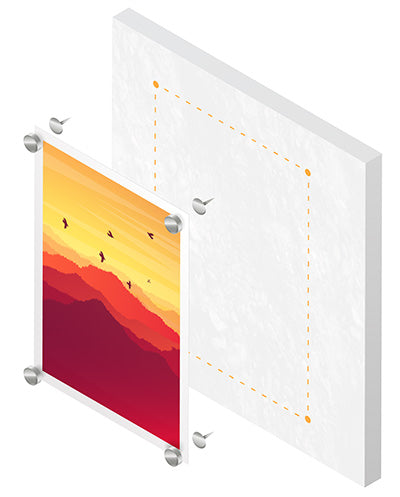 How to Hang Artwork on Walls with Neodymium MagnetsPosters and framed art, no frames or tape needed
- Making a Magnetic Knife Holder with Neodymium MagnetsHide strong magnets behind a thin wood face
 Glass Whiteboards and Neodymium MagnetsWhich magnets hold through the glass, and how many sheets
- Make Your Nanoleaf LED Light Panels MagneticHang and rearrange light panels on steel
- Using Steel Disc Counters for Dungeons and DragonsDurable counters for hit points, spells and loot
- The Best Magnets for Miniatures and Tabletop GamesBases, swappable arms and storage cases
- Using Magnets in Mini Albums and Paper CraftsHidden closures for albums, folios, cards and boxes
- Using Steel Discs as Golf Ball MarkersDurable markers you can engrave or paint
 Testing for Fake Silver and Gold with MagnetsA quick first check for coins, bars and jewelry
 Finding Wall Studs with MagnetsLocate studs by finding the screws in them
 Finding Nails in Wood with Neodymium MagnetsCheck reclaimed lumber before you cut
 Neodymium Magnet Fishing: What to Know Before You Dive InGear, safety and care for treasure hunting
 Make Your Cosplay Costume MagneticQuick-change closures for capes, armor and props
- How to Make Magnetic Window Shades for RVs, Camper Vans, and MotorhomesInsulated and blackout covers that snap on with magnets
 How Magnetic Grate Filters Keep Food, Cosmetics and Other Products SafeHow food plants pull metal out of products
- Magnetic Cabinet Catches: How to Choose and Install Magnets for Cabinet DoorsQuiet, latch-free doors that close with a light snap
- Magnets for Woodworking and Furniture: Selection, Installation, and Project IdeasLids, panels, trim and hidden closures that snap into place
How do I make a floating wooden cross with magnets?
Build the floating cross illusion with two hidden neodymium magnets and clear fishing line: cut list, magnet choice and step-by-step instructions.
How do I build magnetic terrarium ledges and hides?
Magnetic cork bark ledges and hides clamp through the glass with no drilling. See the magnets behind them and tips to make your own.
What are the best magnets for Gridfinity?
Gridfinity bins and baseplates use 6 × 2 mm disc magnets. Here's which grade to choose, how many you need and how to install them.
How do I make custom MagSafe phone accessories?
Build the accessory around a MagSafe ring magnet assembly: set one of our MagSafe Ring Assemblies inside a wallet, grip, stand or mount, and it snaps onto a MagSafe iPhone or a phone in a MagSafe case. Use the 1.5 mm assembly when the accessory has to stay thin and the 2.5 mm assembly when it has to hold more, such as a car mount. For a phone case on a phone without MagSafe, use a steel ring instead, so MagSafe accessories have something to grab. For the build itself (which side faces the phone, where the alignment magnet goes and how thick the cover should be), follow our MagSafe Magnet Installation Instructions.
How do I embed magnets in 3D prints?
Model a pocket about 0.1 to 0.3 mm larger than the magnet and press or glue it in, or pause the print at the layer above the pocket, drop the magnet in and let the printer seal it over. Popular sizes are 6 × 2 mm, 6 × 3 mm, 1/4 × 1/8 Inch and 10 × 2 mm discs. Mark the polarity before you start so every part attaches the right way round.
How do I build a homopolar motor and a magnetic train?
Build two classic science experiments with neodymium magnets, a battery and copper wire: a spinning homopolar motor and a magnetic train.
How do I hang art and photos with magnets?
For posters, prints and photos, tap a flat-head steel nail or tack into the wall at each corner (or stick on an Adhesive Steel Disc), lay the print over them and hold it with a small disc magnet on top. For framed art, screw Countersunk Magnets into the wall and opposite-pole countersunk magnets into the back of the frame. Start with one magnet per corner and add more if the piece slips.
How do I make a wooden magnetic knife holder?
Glue strong disc or block magnets into pockets drilled or routed into the back of a hardwood board about 3/4 in thick, stopping about 1/8 in from the front face where the knives rest. Space drilled pockets 1/8 to 1/4 in apart, and alternate the poles. The thin face is the key: every bit of wood between the magnets and the blades is an air gap, so through 1/8 in of wood a magnet keeps only about a fifth to a quarter of its listed pull.
Which magnets work best on a glass whiteboard?
Magnetic glass whiteboards have a steel sheet behind the glass, so the glass acts as an air gap and ordinary fridge magnets won’t hold much. Use small neodymium cylinder magnets: they’re easy to grip and their extra thickness reaches through the glass. A 3/8 × 3/8 Inch N52 cylinder holds about 6 to 7 sheets of paper.
How do I make LED light panels magnetic?
Stick a 1/2 × 1/16 Inch Disc Magnet with 3M Adhesive to the back of each corner of your light panel. The panel then hangs on any steel surface, such as a steel door, cabinet or metal wall panel, and you can rearrange the layout whenever you like.
How can I use steel discs as Dungeons and Dragons counters?
Steel discs make cheap, durable counters for tabletop games like Dungeons & Dragons. Use them to track hit points, spell slots, gold, ammunition and conditions. Because they’re steel, they also stick to magnetic boards and to minis or trays with small magnets, so they don’t slide around the table.
What are the best magnets for miniatures and tabletop games?
Use small discs that sit flush with the bottom of the base, and tiny magnet pairs for swappable parts. For bases, 5 × 1 mm or 5 × 2 mm discs suit 25 mm bases and 6 × 2 mm or 1/4 × 1/16 Inch suit 32 mm bases, with thin steel lining your storage case. For arms and weapons, use 1/16 × 1/32 Inch, 1/8 × 1/32 Inch or 3 × 1 mm discs. Glue them with super glue, and mark polarity before you start so every part attaches.
How do I use magnets in mini albums and paper crafts?
Use thin 1/32 Inch neodymium disc magnets in pairs, hidden under the paper. A 3/8 × 1/32 Inch Disc is the all-round choice for mini album flips, flaps and folio closures. A 1/4 × 1/32 Inch Disc suits cards, treat boxes and small tags, and a 1/2 × 1/32 Inch Disc holds covers and thicker builds. Mark the poles before you glue so every pair attracts, and keep the paper over each magnet thin: every layer weakens the hold.
Can I use steel discs as golf ball markers?
Yes. Thin, coin-size Steel Discs make durable, inexpensive golf ball markers. They lie flat on the green, don’t crack like plastic, and can be engraved, painted or stamped. Because they’re steel, they also stick to magnetic hat clips and divot tools.
Can a magnet tell if gold or silver is fake?
Real gold and silver aren’t attracted to magnets. If a strong neodymium magnet sticks to a coin, bar or piece of jewelry, it contains iron, nickel or cobalt and isn’t pure gold or silver. But passing the test doesn’t prove it’s real: many common fakes, like copper, brass, tungsten or lead cores, aren’t magnetic either.
How do I find wall studs with a magnet?
Slide a strong neodymium sphere magnet slowly across the wall. It grabs the steel screws or nails that attach drywall to each stud. Mark each spot, and look for a vertical line of marks. Studs are usually 16 inches apart, center to center (sometimes 24 inches). We recommend a 5/8 or 3/4 Inch sphere magnet.
How do I find nails in wood with a magnet?
Roll a strong neodymium sphere magnet slowly over the wood. It sticks where there’s a hidden steel nail, screw or staple. Mark each spot before you cut, plane or sand, to protect your blades and avoid flying metal. A 5/8 or 3/4 Inch sphere works well.
What should I know before I go magnet fishing?
Magnet fishing means dragging a strong neodymium magnet on a rope through a lake, river or canal to pull up lost steel and iron. A fishing magnet only picks up ferromagnetic metal (iron and steel), not gold, silver, aluminum or brass. Expect lots of rusty junk, bring gloves, and rinse and dry your magnet after every trip.
How do I use magnets in cosplay costumes?
Sew Waterproof Sewing Magnets into your costume as closures and attachment points for capes, vests, armor pieces, belts and headwear. They snap together in a second, hold securely, survive washing, and make quick changes easy, which is why theater costume shops use them too.
How do I make magnetic window shades for an RV or camper van?
Cut a shade that overlaps the window frame by about 1 1/2 to 2 in on every side, put a magnet near each corner and every 4 to 6 in along the edges, and let the magnets hold it to steel around the window. Camper vans built from cargo vans usually have painted steel around the windows, so the shade’s magnets stick directly. Most RV and motorhome window frames are aluminum, vinyl or fiberglass, which magnets don’t stick to, so first add Adhesive Steel Discs or matching magnets to the frame. Sew magnets into the edge of fabric shades (PVC sewing magnets, or ordinary disc and block magnets in stitched pockets), use adhesive magnets on Reflectix and rigid panels, and size them so their combined hold, after the fabric gap, is 7 to 10 times the shade’s weight.
How do magnetic grate filters keep food and products safe?
A magnetic grate filter is a frame of stainless steel tubes packed with neodymium magnets, installed in hoppers, chutes and bins. As powders and granules flow between the tubes, the magnets catch iron and steel fragments from worn equipment, so they don’t end up in food, pet food, cosmetics, supplements or plastics. Operators clean the tubes regularly.
How do I choose and install magnets for cabinet doors?
For most cabinet doors, screw a countersunk magnet to the cabinet frame and a slightly larger steel washer to the back of the door, on the latch side near the top or bottom corner. Size the catch for a light pull at the handle, well under 5 lb, and keep the gap between the parts as small as you can: in our calculations, the first 1/32 in of gap cuts the hold by more than half. For a hidden catch, use two magnets (north facing south), each set behind a thin skin of wood. Test with tape before you drill.
How do I use magnets in woodworking and furniture projects?
For most woodworking projects, use disc magnets glued into pockets where you want a clean look, countersunk magnets where you want screws and easy replacement, and steel strike plates opposite them to save cost. Hide a magnet behind wood only when you need to: every 1/16 in of wood over it is gap that weakens the hold, so hidden closures need magnet pairs. Drill the pocket a little larger than the magnet, mark the poles before you glue, and test the fit on scrap.
Still Have a Question?
Our magnet specialists in Denver, Colorado are here Monday to Friday, 9 AM to 5 PM Mountain Time.